

Advertisement
For decades, the deal was sealed on the golf course. Now it’s happening inside a glass box with a perforated ball.
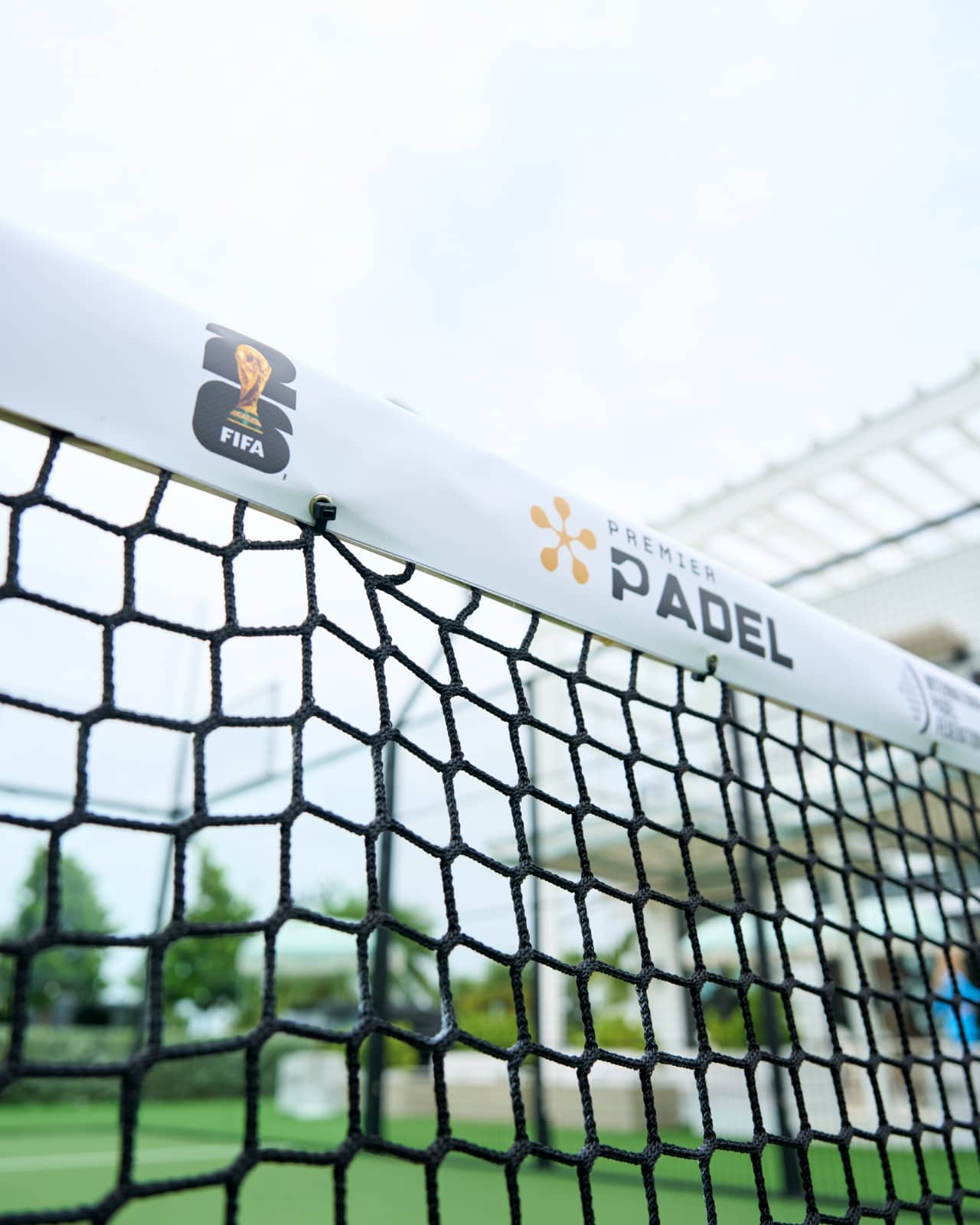
Padel is emerging as the preferred networking medium for a generation of executives who lack the patience for 18 holes and prefer their business conversations at walking pace rather than cart speed. According to the International Padel Federation, more than 30 million people now play across 140 countries, but the sport’s explosion isn’t just recreational — it’s commercial. Private clubs across Europe and luxury resorts throughout the Caribbean are racing to install courts, and the conversations happening between points increasingly involve seven-figure commitments.
Diego Ramos has watched this transformation firsthand. As an instructor at Albany — the ultra-private Bahamian community backed by Tiger Woods and Justin Timberlake — and general manager of the New York Atlantics, he’s seen “global leaders, athletes, and Hollywood stars” share courts. More importantly, he’s facilitated the introductions. “I’ve introduced businesspeople who didn’t know each other on the court,” Ramos told Elite Traveler. “It happens very often.”
The economics explain part of the appeal. A single tennis court converts into three padel equivalents, tripling capacity while generating significantly more revenue per square foot. Unlike resort tennis courts that often sit empty, padel courts stay booked. Travel agencies now offer padel training holidays, and hospitality brands are racing to install facilities before competitors do. Deloitte estimates the global padel economy could exceed $6.85 billion annually within the next few years.
But the real shift is cultural, not infrastructural. Golf’s networking advantage always rested on forced proximity — four hours in a cart with nowhere to hide creates conversational intimacy. Padel achieves something similar through different mechanics: doubles play requires constant communication, points end quickly enough to allow real dialogue between rallies, and beginner-friendly rules mean a managing director can play alongside a junior associate without embarrassment. Where golf networking often feels performative — executives scheduling obligatory rounds they’d rather skip — padel sessions genuinely double as recreation.
The format is spreading beyond luxury hospitality into formal business programming. Sharjah’s Business & Padel Day 2026 brought together investors from the UAE, Brazil, and Portugal, explicitly positioning the sport as networking infrastructure rather than side activity. Sheikh Fahim Al Qasimi, addressing delegates at the event, framed Sharjah’s 193 Brazilian and 267 Portuguese companies as evidence of the emirate’s pull as a regional hub — then put those executives on padel courts together. “Some of the most valuable business conversations take place beyond traditional boardrooms,” organizers noted, treating the court time as the main event rather than the afterthought.
Technology platforms are accelerating the convergence of sport and networking. Playtomic’s partnership with Racketeer Club demonstrated how algorithmic matchmaking can manufacture business-relevant connections: their Greatest Padel Party paired players by skill level rather than letting them arrive with existing groups, forcing hundreds of participants to meet new contacts. “At Racketeer, we’ve always believed that the future of racket sports isn’t just about playing more — it’s about connecting more,” co-founder Stephanie McCaffrey explained. The evening included a £1,000 tournament and England World Cup viewing party, but the real product was the network effect generated by structured mingling.
The US market represents the next frontier. Ramos argues Americans “understand how to sell an experience,” positioning padel courts not as amenities but as access. As private equity circles discover that four executives fit comfortably in doubles play — and that an hour of padel accomplishes what four hours of golf barely manages — expect to see courts replacing conference rooms in membership clubs from Greenwich to Palo Alto.
Golf isn’t disappearing. But for executives who value efficiency over tradition, the question is simple: why spend half a day on a fairway when you can close the same deal in 90 minutes on a court?
Sources
Reporting Notes
Sources
- Is Padel Replacing Golf as the Sport of Business?Arianna Chatzidakis
- Sharjah brings together UAE, Brazilian and Portuguese investors at Business & Padel Day 2026 to explore new business opportunitiesPress Release
- Racketeer and Playtomic unite to shape the future of the padel communitySports News Blitz writer