

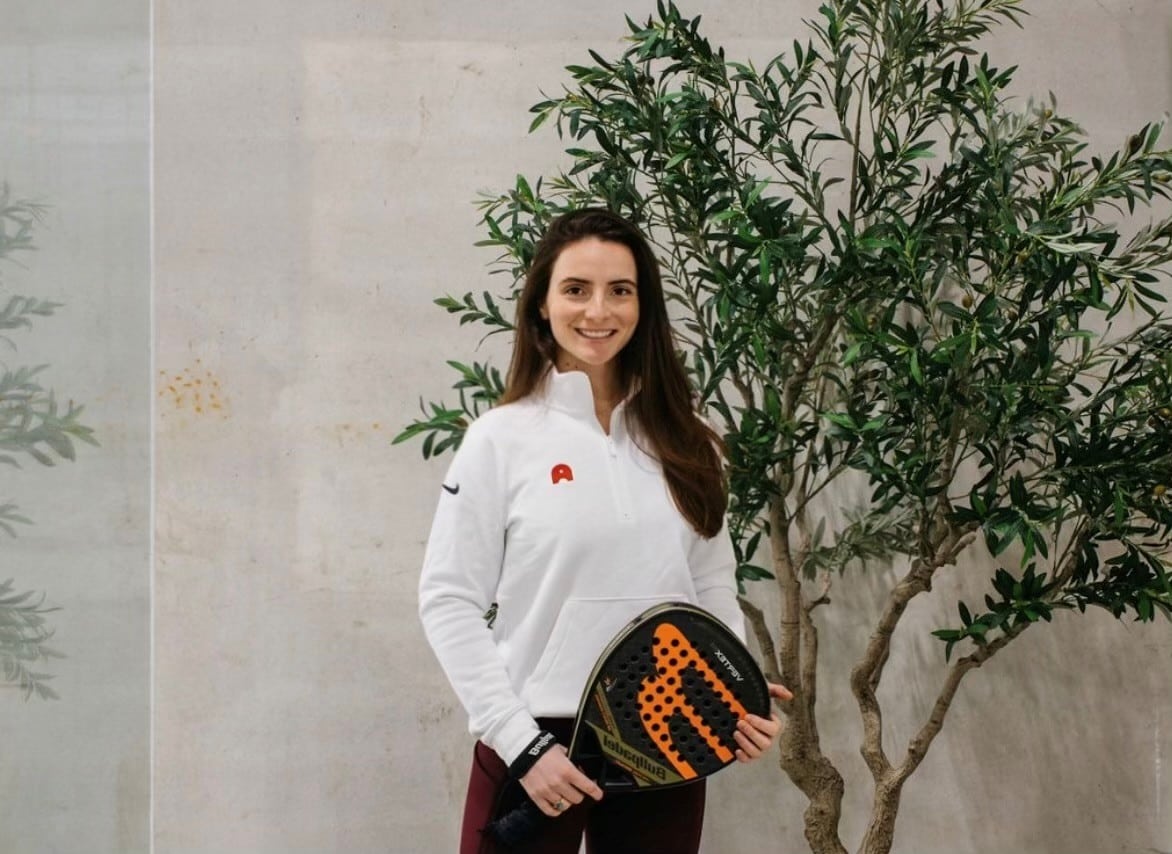
The infrastructure divide between European and American padel expansion comes into sharp focus this month: Leicester is converting three warehouse units into the city’s first public padel facility, while a former New Trier tennis player just made Forbes’ 30 Under 30 for building a members club with five courts, a golf simulator, and sunset views.
Both approaches work — they’re just solving different problems.
Leicester’s planning application, submitted to the city council, calls for three padel courts (two doubles, one singles) plus a pickleball court inside 79,513 square feet of warehouse space on Barkby Road. The developers aren’t subtle about the market opportunity: “Padel is one of the fastest-growing sports in Britain,” they note in planning documents, and Leicester currently has zero publicly accessible facilities. The project includes changing rooms, a cafe, and offices — functional infrastructure designed to unlock latent demand in a city of 350,000 that’s been watching the sport boom elsewhere in the UK.
The utilitarian approach makes sense in a country where padel penetration remains uneven despite rapid growth. Leicester isn’t competing with established clubs for premium members — it’s creating the category from scratch. “The scheme has the potential to increase participation in sport across the city,” the application argues, positioning padel as a public health initiative as much as a business venture.
Contrast that with Abigail McCulloch’s Alma Padel in Glenview, Illinois, which opened last spring and just earned McCulloch a spot on Forbes’ 2026 30 Under 30 Sports List. Alma’s five courts anchor a 2,300 Ridge Drive facility that also features saunas, mahjong tables, a bar-cafe, and what McCulloch calls “one of the best sunset views in the North Shore.” The club pairs new players with three peers at their skill level, creating instant social bonds. “It was super exciting and a complete surprise,” McCulloch told The Record North Shore about the Forbes recognition.
But Alma’s real innovation isn’t the amenities — it’s the staffing model. McCulloch also founded Padel Au Pair, a rotational program that imports skilled instructors from padel-mature markets to fill the coaching gap in U.S. clubs. The problem she’s solving: America has racket athletes but no lifelong padel players, creating a bottleneck for clubs trying to scale quality instruction. Leicester’s warehouse conversion won’t face that issue — the UK already has a deeper bench of domestic coaches.
The divergence reveals a fundamental truth about padel’s expansion: infrastructure follows culture, not the other way around. Leicester needs courts to demonstrate the sport exists. The North Shore needs experience design to justify the investment. “Once you’re playing the sport, you find that it’s really as easy to pick up as pickleball, and that’s not an exaggeration,” McCulloch told The Record — but ease of play doesn’t translate to spontaneous adoption without the right framing.
Meanwhile, the next generation continues grinding through the FIP Promises Tour, largely unbothered by infrastructure debates. This month’s European stops — Finland, Belgium, Portugal, Italy — drew over 100 pairs to Paredes alone, with local talents like Finland’s Mario Laszlo (double titles in U18 and U16) and Italy’s Vittoria Fornarotto (double titles in U18 and U16 girls) stacking wins. The pipeline doesn’t care whether they’re training in repurposed warehouses or sunset-view member clubs — just that courts keep appearing.
Leicester’s planning application now goes to council officers for review. If approved, it joins a U.S. market projected to grow padel clubs by 52% year-over-year, according to the 2025 State of Padel report. Both models will work. The question is which infrastructure strategy scales faster when the sport finally hits saturation.
Sources
- Plans announced for city’s ‘first padel centre’ — BBC
- From Finland to Italy, celebrations for the NextGen — International Padel Federation
- North Shore native behind Alma Padel makes Forbes’ 30 Under 30 — The Record North Shore
Sources: